From Wargames
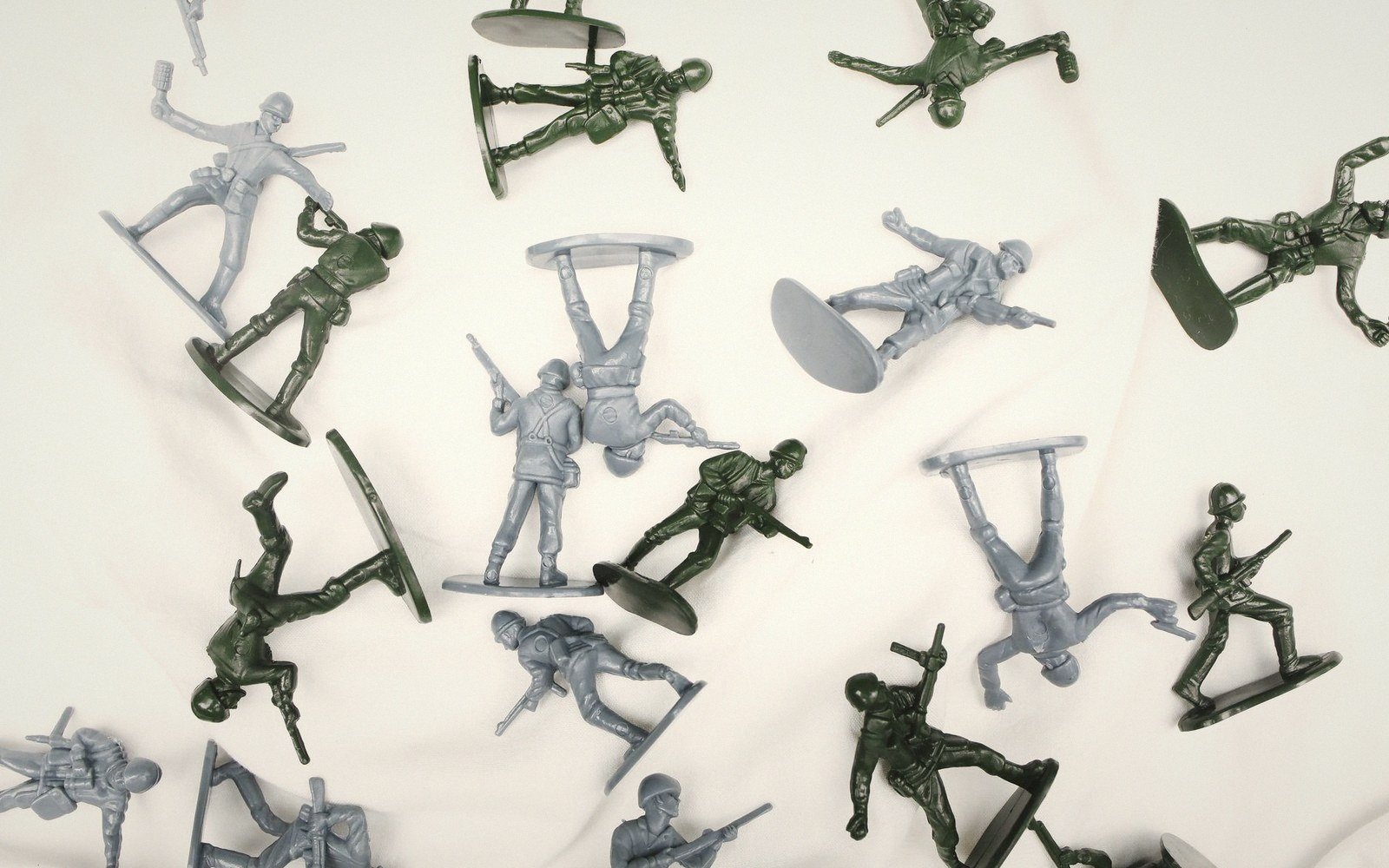
01The soldiers underneath the characters
Every tabletop roleplaying game descends from a man moving lead figures across a sand table. The line runs directly: H.G. Wells codifying miniature battles in Little Wars (1913), the Prussian Kriegsspiel tradition filtering into hobby wargaming, and then Gary Gygax and Dave Arneson adapting the medieval miniatures rules of Chainmail (1971) into something that zoomed all the way down to a single fighter with a name. The machinery underneath — the parts that still hum in games published today — was designed to simulate formations of troops, not individual adventurers. Understanding what was kept and what was quietly discarded explains a surprising number of rules that otherwise seem arbitrary.
Chronology
- 011913 — H.G. Wells publishes Little Wars, codifying miniature wargaming rules
- 021971 — Chainmail (Gygax and Perren) establishes the movement and combat framework that feeds directly into early D&D
- 03D&D 3rd edition onward — the six-second round formalized as a standard unit of time
Scale is the most visible inheritance. The famous six-second combat round, canonized in Dungeons & Dragons from its third edition onward, is not a natural unit of drama; it is a natural unit of movement on a gridded map where a figure represents a creature advancing across terrain. Wargames needed rounds short enough to make formation changes meaningful, long enough to avoid absurd bookkeeping. Six seconds served both requirements when the "figure" was a block of pikemen. When the figure became one person, the abstraction survived intact. A character performing a complex sword attack, drawing a potion, shouting an order, and half-stepping around a pillar is doing all of that in six seconds — a choice that produces famous arguments about what is physically possible in a single "turn."

Movement rates share the same ancestry. Feet or squares per round translate directly from inches-per-turn on a tabletop measured in model scale. The conversion factors — typically ten feet of game distance per inch of physical measurement — were already baked into Chainmail. Early D&D simply inherited the numbers; the fiction of "dungeons" was retrofitted to an engine that already knew how fast a man-at-arms could cross a field.
Early roleplaying rules inherited directional bonuses: attacks from the rear often ignored shields or gained accuracy.
Morale, though, is where the wargame logic cuts deepest — and where modern design most often goes quiet. Wargame units broke and fled; that behavior was not optional. Morale rules existed because a real engagement rarely ends with one side annihilated to the last soldier; it ends when one side's will collapses. In the wargame source material this is mechanical and mandatory: units check morale at specified thresholds, fail or hold, rout or stand. Early roleplaying systems preserved this as a roll the referee made for monsters and NPCs when they took enough casualties. Later editions progressively softened it, made it optional, or removed it entirely. The casualty is significant: a rule whose entire purpose was to model the most historically consistent thing about violent conflict became an afterthought once the game centered on heroic individuals rather than historical formations.
What was kept and what was dropped
- 01Kept: six-second round, movement rates measured from wargame scale, line-of-sight rules, difficult-terrain penalties, morale as a referee tool (early games)
- 02Quietly dropped (in most modern systems): mandatory morale for enemies, facing-dependent armor and attack values, unit-cohesion mechanics
- 03Partially retained: grid-based tactical play, light-radius as a hard visibility boundary
Facing — which side of your model is presented to which enemy — mattered enormously in wargames because flanks and rears had genuinely different armor values. A unit's front was its shields and its spears; its back was unprotected. Early roleplaying rules inherited directional bonuses: attacks from the rear often ignored shields or gained accuracy. This is wargame logic applied to a single figure. As roleplaying moved away from the miniatures table and toward theater-of-the-mind play, facing became impossible to track without physical models, and most systems simply stopped asking. Some skirmish-level games and tactical subsystems still enforce it, but they are explicitly aware they are retrieving something that the mainstream dropped.
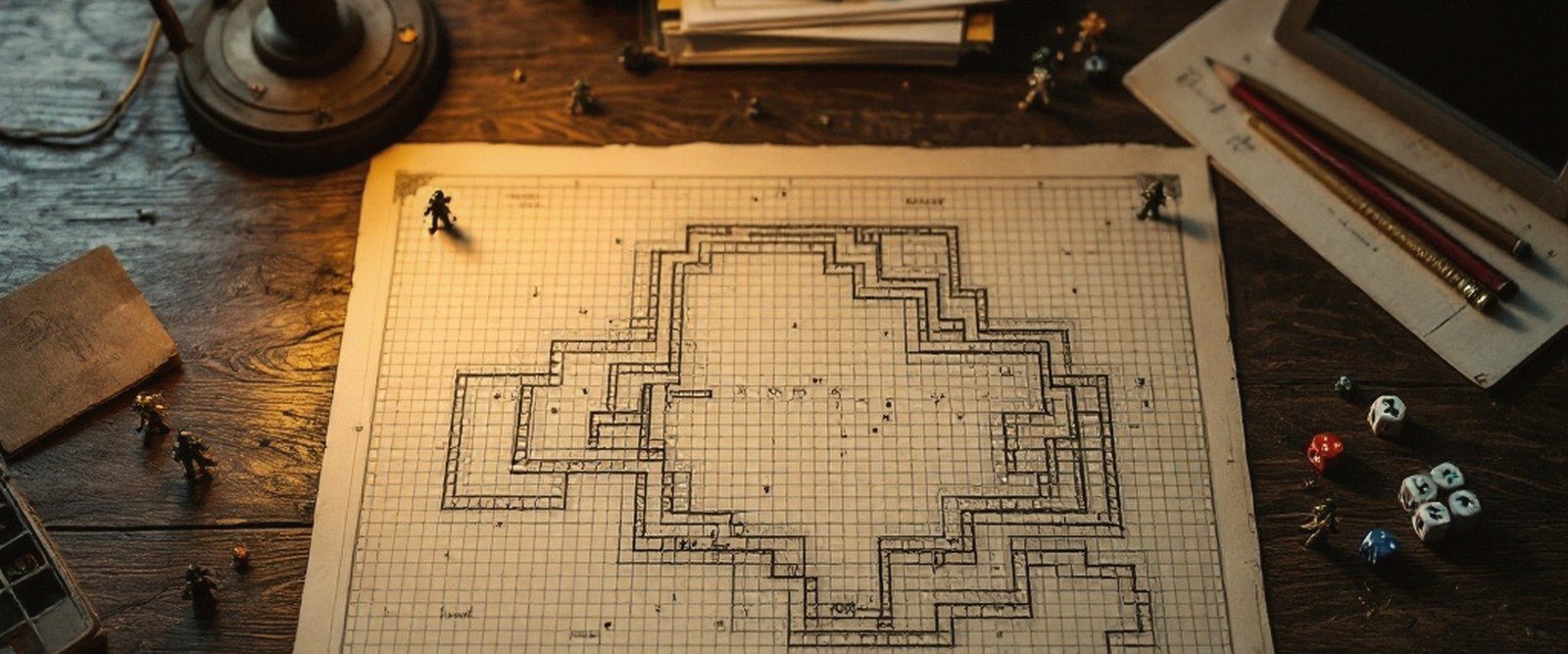
The line-of-sight rules in dungeon exploration came from exactly the same source: wargame rules for what a unit could "see" across the table, translated into corridors. Doors as blocking elements, light radius as a hard boundary, movement rates slowing in difficult terrain — all of it is wargame cartography applied to a ten-by-ten-foot stone room.
What the transition from wargame to roleplaying game truly changed was the question being asked. A wargame asks which side wins and at what cost; a roleplaying game asks what happens to this particular person. The mechanical vocabulary was largely the same at the moment of conversion, but it was pointing at a different target. Some of it fit the new question well. Some of it was never quite the right shape, and the decades since have been a long process of either noticing that or not.